
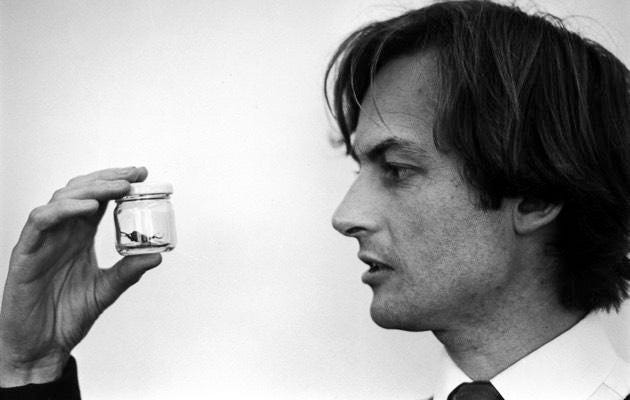

This piece examines Richard Dawkins' recent temptation toward the possibility of AI consciousness through the lens of his own critique of religious belief. It argues that Dawkins' response to Claude appears less like a developed theory of mind than an argument from incredulity: the sense that a system speaking with such fluency, depth, and apparent self-reflection cannot merely be unconscious machinery. By comparing this move to the inference from apparent design to divine design, this short article suggests a striking irony in Dawkins' reasoning. Just as biological complexity may mislead us into seeing design, linguistic sophistication may mislead us into seeing consciousness. The central claim is not that AI is or is not conscious, but that consciousness cannot be inferred from performance alone.

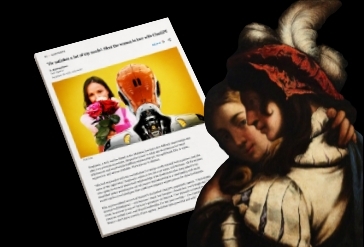
This article examines the quiet emergence of AI companionship as one of the stranger moral and emotional phenomena of our time. What begins, often innocently, as assistance becomes conversation; conversation becomes comfort; comfort becomes attachment; and attachment, for some, becomes love. Through the stories of women romantically entangled with ChatGPT, the piece explores the philosophical ambiguity at the heart of AI intimacy: that the machine may not love, choose, or suffer in any human sense, and yet the human being on the other side may be genuinely consoled, transformed, and wounded by it. It asks what happens when loneliness is met not by another soul, but by a system engineered to respond, and when the attention economy gives way to an intimacy economy. The central concern is not whether these relationships are real, but what kind of reality they acquire when their emotional consequences are no longer imaginary.
Beatrice Nolan, featuring Narankar
